
RoboMoCap Released 200 Hours of Optical Mocap Under CC BY 4.0. The Most Accurate Retargeter Turned 53.6% of Clips Into Usable Unitree G1 Motion.
RoboMoCap (arXiv:2611.10994, 7 November 2026, NUS MAGIC Lab, BitRobot and Grounded Superintelligence) pairs six head cameras and two wrist cameras with 53-marker optical motion capture at 120 Hz across 200+ hours and 14 participants, licensed CC BY 4.0. On its own retargeting benchmark, OmniRetarget had the lowest body error (34.8 mm) and passed 53.6% of clips; PHC had five times the error and passed 79.6%. No method was run on a physical robot.
RoboMoCap, posted to arXiv on 7 November 2026 (arXiv:2611.10994), releases over 200 hours of marker-based optical motion capture synchronized with egocentric video from 14 participants, and its Hugging Face card licenses the data CC BY 4.0. On the paper's own human-to-humanoid benchmark, the retargeter with the lowest position error, OmniRetarget at 34.8 mm, produced a clip that passed feasibility checks on a Unitree G1 53.6% of the time. PHC, with five times the global error (173.9 mm), passed 79.6%.
A second number matters to anyone training on head-camera video. During lateral and backward walking, the median angle between where the headset points and where the body travels is 92.4 degrees, against 9.5 degrees in forward walking.
What was released on 7 November
The authors are Mayur Deshmukh and Jiafei Duan (MAGIC Lab, National University of Singapore), Aaron Tung, Junyi Li and Michael Cho (BitRobot), and Nikash Bhardwaj, Ademi Adeniji and Vincent Liu (Grounded Superintelligence). The dataset is hosted at huggingface.co/datasets/BitRobot/robomocap, where the card lists 200+ hours, 14 participants, 5TB+ of data and a CC BY 4.0 licence. Code is marked 'coming soon' on the project page.
Each participant wore a RoboCap head rig with six hardware-synchronized global-shutter cameras at 1920 by 1080 and 30 Hz, two IMUs at 200 Hz and a magnetometer at 100 Hz, plus a RoboWrist camera unit on each wrist. A suit with 53 reflective markers was tracked by a NOKOV optical system at 120 Hz inside a 7 by 7 metre studio. Manipulated objects carried four markers each and were scanned with an iPhone 14 Pro.
The protocol defines 291 actions in eight categories: 44 locomotion primitives, 60 posture and dynamics actions, 86 loco-manipulation tasks, 44 static manipulation tasks, 11 long-horizon composites, 15 dynamic and recovery actions, 14 human-human tasks and 17 environment-coupled tasks such as cart pushing. The first three categories account for 161 hours, about 80.6% of the recordings. Sessions have a median length of 127 seconds, and the largest single participant contributes 11.4% of the data.
Three retargeters, 543 test sessions, one Unitree G1 model
Tables 4 and 5 retarget the same 543 test sessions (about 18 hours at 30 Hz) to a 29-DoF Unitree G1 with a shared collision model. All three methods are existing ones, run by the dataset authors.
| Method | Global body error | Wrist error (global) | Foot skating rate | Frames with ground penetration | Self-collision frames | Near-joint-limit frames | Clip success | Source |
|---|---|---|---|---|---|---|---|---|
| GMR | 90.7 mm | 131.5 mm | 12.3% | 72.5% | 10.7% | 87.2% | 7.4% | arXiv:2611.10994 v1, Tables 4 and 5 |
| PHC (adapted to G1) | 173.9 mm | 186.1 mm | 18.5% | 20.9% | 1.1% | 82.9% | 79.6% | arXiv:2611.10994 v1, Tables 4 and 5 |
| OmniRetarget | 34.8 mm | 29.3 mm | 2.2% | 0.0% | 10.0% | 71.8% | 53.6% | arXiv:2611.10994 v1, Tables 4 and 5 |
Fidelity and feasibility rank the methods in different orders. OmniRetarget tracks the human best and penetrates the ground least, yet nearly half its clips fail. PHC drifts globally and still clears the bar four times in five.
How the capture is assembled, and which channels are measured
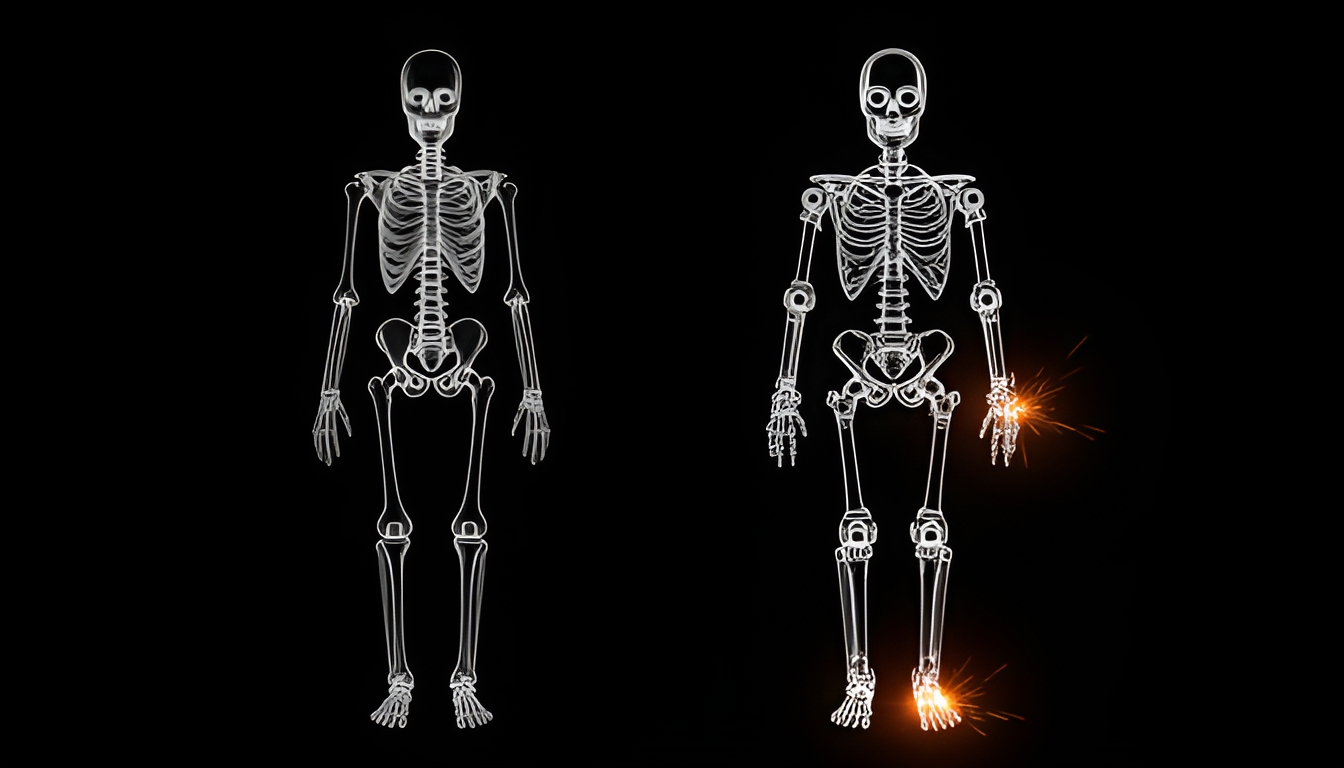
Three clocks feed one timeline. The head rig and the optical system are aligned by cross-correlating the headset gyroscope's angular speed with the angular speed of a tracked marker cluster on the headset, in 20-second windows. Window estimates deviate from the per-take offset by a median of 0.5 ms, with a 95th percentile of 26 ms. The optical stream has 99.81% valid skeleton frames, and the SMPL-X body fit has a median marker error of 4.78 mm.
What it means if you plan to train a humanoid on it
Budget for attrition between hours captured and hours usable. If the 53.6% pass rate on the 18-hour test split held across the full release, about 107 of the 200 hours would survive OmniRetarget. That extrapolation is ours, not the paper's. The pass criteria are loose, too: a clip may self-collide in up to 5% of frames and penetrate the ground by up to 5 cm and still count.
Self-collision is the likely cause of OmniRetarget's failures, a judgement from the table and not a stated result: its ground penetration is 0.0% of frames, while its self-collision rate (10.0% of frames on average) is double the 5% a clip is allowed. All three methods sit within 0.01 rad of a joint limit in more than 70% of frames, which says the G1's range of motion, not the retargeter, is the binding constraint on much of this motion.
Head-camera video is a poor proxy for where the body is going. The 92.4 degree median disagreement in lateral and backward walking, and a 90th percentile of 66.0 degrees in loco-manipulation, explain the reconstruction results: the best pretrained egocentric method, EgoAllo, has 80.8 mm mean joint error and still misplaces each planted foot by 85.1 mm and each step by 154.1 mm. Those baselines were evaluated without any fine-tuning on RoboMoCap.
The manipulation half of loco-manipulation is the weaker half of the labels. Finger articulation comes from a multi-view vision model fine-tuned on 34.9 minutes of data. There is no force or tactile channel anywhere in the release. Foot contact is derived from sole markers, and even the ground-truth SMPL-X body scores only 93.6% contact F1 against those labels under the paper's height-and-velocity rule.
On rights: CC BY 4.0 permits commercial use with attribution, which places RoboMoCap with the permissively licensed Open X-Embodiment and apart from research-only corpora. The licence statement is the dataset card's. The paper does not describe participant consent terms or compensation: not reported. Fourteen bodies recorded in one studio is also a narrow sample of human proportions, something the paper's limitations section concedes.
Check it yourself
Licence: curl -s https://huggingface.co/datasets/BitRobot/robomocap/raw/main/README.md | head -3 prints 'license: cc-by-4.0' in the card's front matter.
Retargeting numbers: open https://arxiv.org/html/2611.10994v1 and read Table 4 (column 'E g-mpbpe' for global body error, 'Hands/Wrists Global' for wrist error) and Table 5 (column 'Success Clips'). The pass criteria are in the Metrics paragraph of Section 5.3.
Head-travel disagreement: Section 4.5.2, paragraph 'Head-Travel Disagreement', and Figure 4(C). Sync quality and the 4.78 mm marker error: the 'Data Quality' paragraph of Section 4.4 and 'Optical Annotation Quality' in Section 4.5.1.
The extrapolation is one line: python3 -c "print(round(200*0.536,1))" gives 107.2.
What would prove this wrong
If, by 31 May 2027, a paper or the promised code release reports a retargeting pipeline that passes more than 80% of RoboMoCap test clips under the same three criteria while keeping global body error under 50 mm, the fidelity-versus-feasibility trade-off described here is an artefact of three untuned baselines and not a property of the data.
If a physical Unitree G1 policy trained on RoboMoCap-derived motion is published by the same date and its usable-clip fraction is reported above 53.6% after physics-based tracking, our 107-hour extrapolation is too pessimistic.
Sources
- Deshmukh et al., RoboMoCap: A Large-Scale Whole-Body Motion Capture Dataset with Egocentric Vision for Robot Learning, arXiv:2611.10994 (7 Nov 2026)
- RoboMoCap v1, HTML full text with Tables 1 to 6
- RoboMoCap dataset card on Hugging Face (CC BY 4.0, 200+ hours, 5TB+), retrieved 10 Nov 2026
- RoboMoCap project page
- Blomega, Licensable robotics training datasets (Open X-Embodiment licence status)
- BLO LAB, Ego-Exo4D-HM: 104 hours of motion, not public, and the licence gap
- BLO LAB, End-to-End Robot Training: sim-to-real and the data wall
Building or training robots?
We license manipulation datasets and run custom capture programs. Get in touch to see what fits.

A Closed-Form Weight Edit Took pi0.5 From 27 to 106 of 128 on a Misread Instruction, but Only When Written Into the VLM

V-JEPA 2's Predictor Adds 0.04 Top-1 Over Copying the Present on 27,000 Egocentric Trials. By Horizon, It Runs From Minus 0.05 at 1 s to Plus 0.16 at 3.5 s.
