
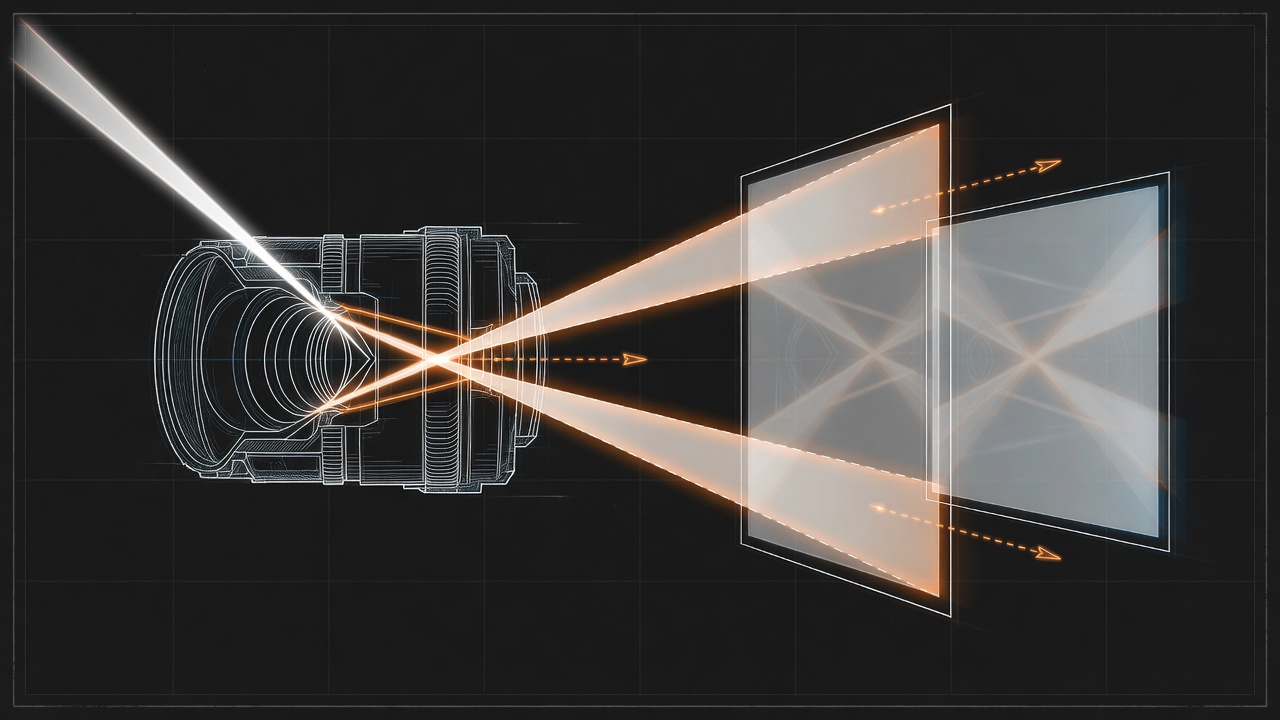
StereoEngine Made Stereo Training Pairs Without a Stereo Camera. On Zero Real Demonstrations It Beat a Point-Cloud Policy That Scored 0 of 20 on Every Task.
StereoEngine (arXiv:2610.12734, 8 October 2026, USC) synthesizes stereo image pairs for bimanual manipulation from monocular video or simulation alone. With zero real demonstrations, a policy conditioned on its synthetic pairs won 11 to 15 of 20 trials across three tasks where the simulated point-cloud comparison won 0 of 20 on every one. Mid-training a separate real-data policy on 3,469 lifted episodes raised pooled success from 60.0% to 83.3%.
StereoEngine generates stereo image pairs for robot manipulation without a stereo camera (arXiv:2610.12734, submitted 8 October 2026, Jason Chen, I-Chun Arthur Liu, Gaurav Sukhatme and Daniel Seita). Trained on zero real demonstrations, a bimanual policy conditioned on StereoEngine's synthetic pairs won 11 to 15 of 20 trials across three tasks (Stack Two Bowls, Lift Two Bottles, Container Plate). The comparison policy, conditioned on simulated point clouds instead, won 0 of 20 on every single one of those tasks.
A second version of the system mid-trains a real-data policy on stereo pairs lifted from monocular video before fine-tuning on real teleoperated demonstrations. That lifted the policy's pooled success across three different tasks from 36 of 60 (60.0%) with no stereo mid-training to 50 of 60 (83.3%) with it.
What changed: two ways to fake the second camera
Stereo vision helps vision-language-action policies, but large-scale real-world stereo manipulation data barely exists; prior stereo supervision for robotics came almost entirely from simulation. StereoEngine, posted 8 October 2026, offers two generation routes instead of collecting more real stereo footage.
StereoEngine-L (lift) takes a monocular left-eye video, estimates depth, warps it into a synthetic right-eye view, and inpaints the disoccluded regions with a video diffusion model, turning 3,469 public monocular episodes into stereo pairs without ever training on real stereo video. StereoEngine-S (synthesize) instead renders a stereo pair directly in simulation, jointly generating both photorealistic left and right views so the two frames are geometrically consistent by construction, with no real video input at all.
Generation quality was checked against two other monocular-to-stereo methods on 50 held-out real stereo clips (Table III): StereoEngine scored PSNR 15.31, SSIM 0.530 and LPIPS 0.470, against StereoCrafter's 10.50 / 0.457 / 0.621 and SVG's 12.83 / 0.514 / 0.513. Higher PSNR and SSIM, and lower LPIPS, all favor StereoEngine.
The zero-real-demo result: StereoEngine-S versus point clouds
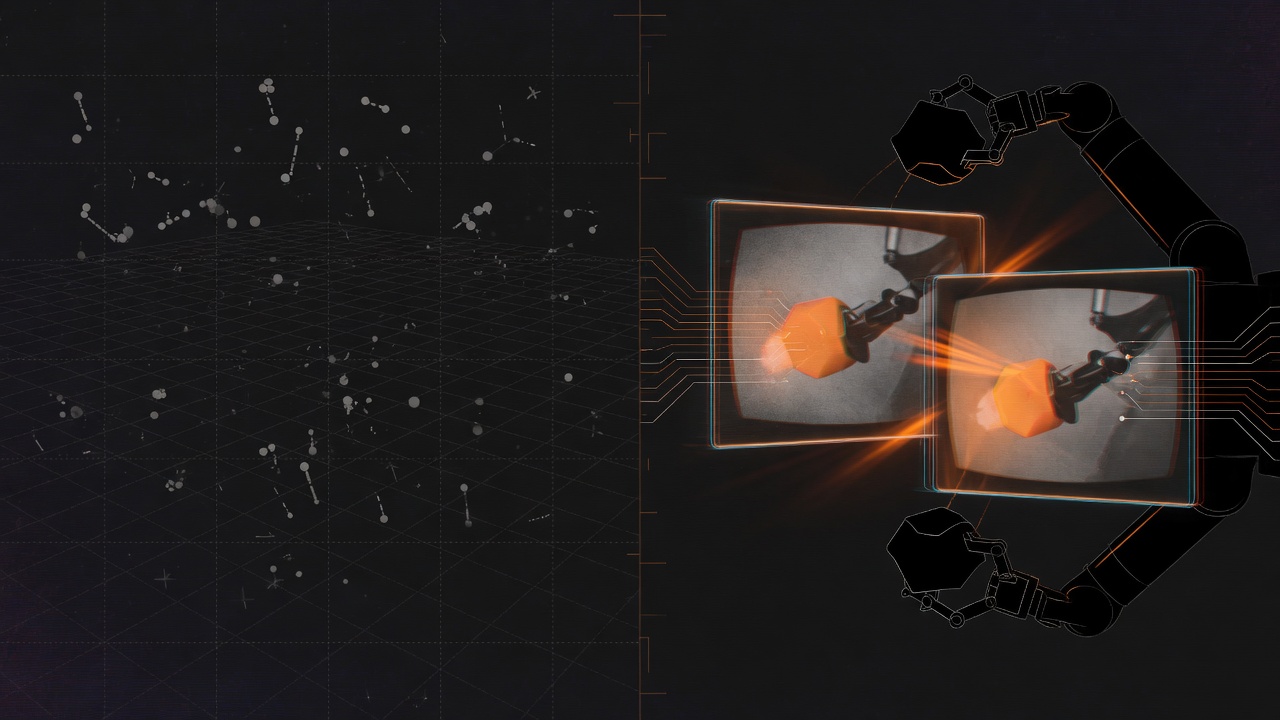
The sharper comparison is StereoEngine-S, where neither policy sees a single real demonstration. One policy (labelled Point Clouds) is conditioned on simulated 3D geometry; the other is conditioned on StereoEngine's synthetic stereo image pairs. Two different downstream policy architectures, ExStereo and StereoVLA, were tested with each conditioning.
| Task | ExStereo + Point Clouds | ExStereo + StereoEngine | StereoVLA + Point Clouds | StereoVLA + StereoEngine |
|---|---|---|---|---|
| Stack Two Bowls | 0/20 | 11/20 | 0/20 | 7/20 |
| Lift Two Bottles | 0/20 | 13/20 | 0/20 | 9/20 |
| Container Plate | 0/20 | 15/20 | 0/20 | 11/20 |
Every point-cloud cell is zero. Image-based stereo conditioning, even entirely synthetic, is doing something the 3D point representation is not on this policy pair and these three tasks.
The mid-training result: lifting monocular video into stereo
StereoEngine-L targets a different question: given a policy that will be fine-tuned on real teleoperated data anyway, does mid-training it on synthetic stereo first help? The real fine-tuning sets were small by design (200 demonstrations for Stack Two Bowls, 50 for Lift Transparent Bottles, 20 for Close Door, collected with a ZED Mini 2 stereo camera), and mid-training used 3,469 public monocular episodes lifted into stereo pairs by StereoEngine-L.
Pooled over the three tasks, mid-training on StereoEngine's lifted pairs reached 50 of 60 trials (83.3%), against 36 of 60 (60.0%) with no mid-training, 40 of 60 (66.7%) with StereoCrafter-lifted pairs, and 31 of 60 (51.7%) with SVG-lifted pairs. StereoCrafter and SVG mid-training both underperformed the no-mid-training baseline on at least one task (Table II), meaning a worse stereo-lifting method can cost more than it gives back.
What this means for teams without a stereo rig
The practical reading is narrower than "StereoEngine beats real data": StereoEngine never beats having actual real demonstrations, it beats having zero of them or having only enough to be data-starved. The 0/20 point-cloud result with zero real demonstrations is the stronger claim here, because it rules out a trivial explanation (that image conditioning just works better than any geometric representation regardless of data source): the gap only shows up when there is no real data to anchor either representation.
The StereoEngine-L comparison is a warning about generation quality, not just presence or absence of synthetic data: StereoCrafter and SVG mid-training underperformed a no-stereo baseline on individual tasks despite both being purpose-built monocular-to-stereo methods. A team adopting this approach needs the generation-quality numbers (Table III), not just the end task success, before trusting a third-party lifting method.
Check it yourself
Tables II and III are in the HTML build at https://arxiv.org/html/2610.12734v1. Recomputing the pooled StereoEngine-L rate: python3 -c "print(round((13+18+19)/60*100,1))" prints 83.3, matching Stack Two Bowls 13/20, Lift Transparent Bottles 18/20, Close Door 19/20. The no-mid-training baseline: python3 -c "print(round((9+11+16)/60*100,1))" prints 60.0.
Real fine-tuning demonstrations were collected with a ZED Mini 2 stereo camera (200 / 50 / 20 across the three tasks). The paper gives episode counts, not hours, for every data quantity reported. As of 13 October 2026 we found no project page or code link on the abstract page.
What would prove this wrong
Our claim: synthetic stereo conditioning, generated either by lifting monocular video or by dual rendering in simulation, substitutes for real stereo data well enough to turn a complete failure (0/20) into partial success (more than half of trials) under a zero-real-demonstration constraint, and well enough to raise a real fine-tuned policy's pooled success by 20+ points when used as mid-training.
It is wrong if, by 30 June 2027, an independent replication on a different robot or task set finds the point-cloud baseline matching or beating StereoEngine conditioning under the same zero-real-demonstration constraint, or finds StereoEngine-L mid-training producing no significant lift (within a few points) over no mid-training once real fine-tuning data exceeds roughly 200 demonstrations per task, the point at which the paper's own fine-tuning sets already sit.
Sources
Building or training robots?
We license manipulation datasets and run custom capture programs. Get in touch to see what fits.

A Closed-Form Weight Edit Took pi0.5 From 27 to 106 of 128 on a Misread Instruction, but Only When Written Into the VLM

V-JEPA 2's Predictor Adds 0.04 Top-1 Over Copying the Present on 27,000 Egocentric Trials. By Horizon, It Runs From Minus 0.05 at 1 s to Plus 0.16 at 3.5 s.
