
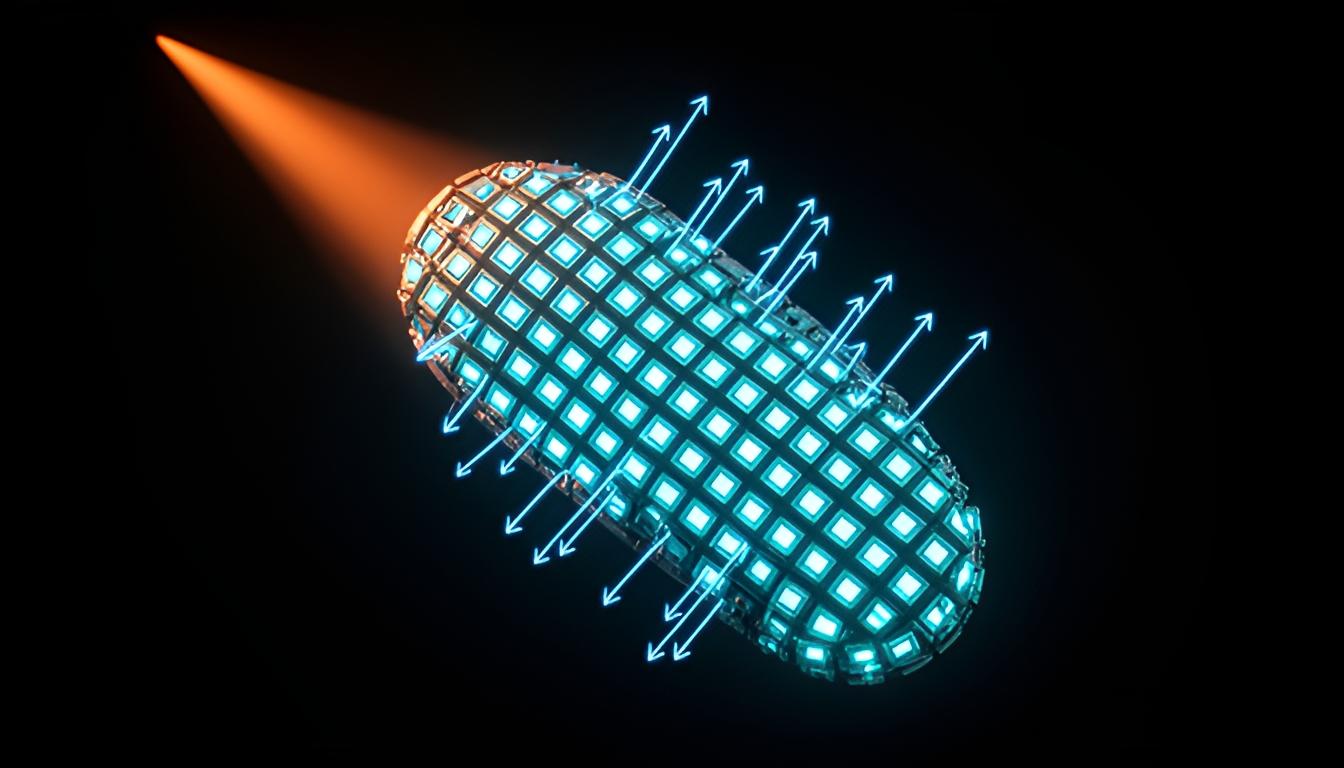
A $50 Tactile Fingertip Lifted Three Contact-Rich Robot Tasks From 45.0% to 91.7% Success, and Shear Data Did Most of the Lifting
PanoTac (arXiv:2611.03520, submitted 2 November 2026) is a low-cost, compliant three-axis tactile fingertip, a 12-by-32 grid of taxels reading normal and shear force at 60 Hz for under $50 a fingertip. Across test-tube preparation, grain scooping, and salt pouring, a vision-plus-PanoTac policy averages 91.7% success against 45.0% for vision alone, with two intermediate tactile designs landing at 73.3% and 78.3% in between.
PanoTac is a low-cost, compliant tactile fingertip that reads a dense 12-by-32 grid of three-axis contact points (one normal force channel, two shear channels) at 60 Hz, for a component cost under $50 per fingertip (arXiv:2611.03520, submitted 2 November 2026). Across three contact-rich real-robot tasks, test-tube preparation, grain scooping, and salt pouring, a vision-plus-PanoTac policy averages 91.7% success against 45.0% for a vision-only policy, a 46.7 percentage point gain.
Two intermediate tactile designs sit between those numbers: a dense array that reads normal force only reaches 73.3%, and a sparse three-axis array reaches 78.3%. The full dense three-axis sensor is what closes the remaining gap.
What changed: dense shear sensing at fingertip scale, cheaply
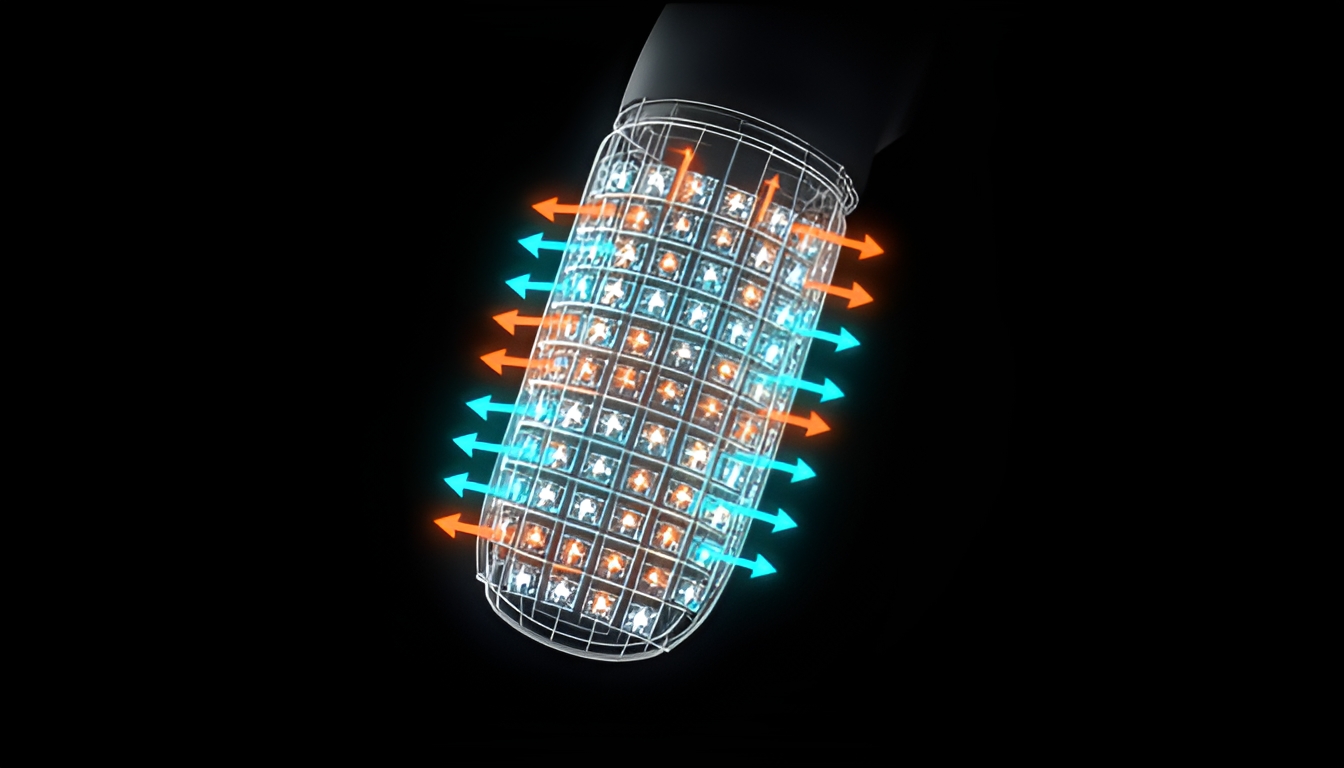
Contact-rich manipulation depends on information a camera cannot see directly: when scooping grains, the contact pattern on the spoon reveals its orientation, and the resistance transmitted through the grasp guides how to move next. PanoTac's fingertip provides that as a structured 12-by-32-by-3 tensor, two spatial dimensions of taxels times three force components, normal (z) plus two shear directions (x, y), built from a compliant, low-cost sensing layer rather than an optical or camera-in-fingertip design.
The team characterized the sensor directly rather than only reporting downstream task performance. Repeatability (how consistent one sensor's reading is across repeated identical contacts) and cross-instance consistency (how consistent two different PanoTac units read the same contact) both improve as contact force increases, which matters for anyone deciding what force range to trust the sensor in:
Error rates across three force bands, from a light 0.4 to 1 N touch up to a firm 6 to 12 N grip:
| Measure | 0.4-1 N | 1.2-4 N | 6-12 N |
|---|---|---|---|
| Repeatability, normal (z) | 15.5% | 6.9% | 4.8% |
| Repeatability, shear (x, y) | 21.1% | 8.3% | 4.3% |
| Cross-instance, normal (z) | 22.9% | 12.5% | 10.8% |
| Cross-instance, shear (x, y) | 4.2% | 5.3% | 8.8% |
Normal-force repeatability and cross-instance error both improve by roughly a factor of 3 to 5 from the lightest to the firmest touch band. Cross-instance shear error moves the other way, rising from 4.2% to 8.8%, meaning two PanoTac units agree on light shear touches more than on firm ones, a detail a team calibrating multiple fingertips against each other would otherwise miss.
The mechanism: shear information closes most of the gap
PanoTac feeds its 12x32x3 tactile tensor into a CNN encoder (512 dimensions), alongside a ResNet-18 vision encoder (also 512) and a 9-dimensional proprioception stream, into a diffusion policy that predicts a 16-step action sequence at 6 Hz. The ablation ladder below is the paper's own comparison of four input combinations, trained and evaluated identically, across the same three tasks:
What it means for a team instrumenting a manipulation pipeline
The ablation ladder is the useful part, not just the headline 46.7-point gain. A dense normal-force array alone already recovers more than half the gap (45.0% to 73.3%), which means spatial resolution on its own is a large lever before shear is even considered. The sparse three-axis design adds shear while keeping taxel count low, and reaches 78.3%, ahead of the denser normal-only array despite fewer sensing points, which means shear information helps even at low spatial resolution. The full dense three-axis design combines both and reaches 91.7%, an 18.4-point gain over dense-normal-only. For a team with a limited sensor budget, the ordering in this ladder is the actual decision-relevant result: shear and spatial density each contribute independently, rather than one making the other redundant.
The paper also reports a smaller generalization test: a PanoTac-equipped policy ran 6 of 6 trials on an empty test tube, 4 of 4 in-distribution trials, and 5 of 5 out-of-distribution trials, 100% across all three conditions on that task. One task at a small trial count is not a generalization claim on its own, but it is consistent with the sensor's characterization data above: error rates stay bounded across the 0.4 to 12 N range the paper tested, which is the force range most of the fingertip's real contact during these tasks falls into.
At under $50 per fingertip, the result also argues against treating dense tactile sensing as a sensor-cost problem. The constraint the paper demonstrates is spatial and directional coverage (taxel count and shear channels), not price, which changes what a team should optimize when choosing a tactile fingertip for a new build.
Check it yourself
The repeatability and ablation tables are in the HTML build at https://arxiv.org/abs/2611.03520 (mirrored at arxiv.org/html/2611.03520). The headline gap checks out directly from the paper's own overall figures: 91.7 minus 45.0 equals 46.7 percentage points, matching the abstract's stated figure.
The sensor spec (12x32x3 taxel grid, 60 Hz, under $50 per fingertip) and the diffusion-policy training details (100 training steps, 16 DDIM inference steps, 6 Hz control, roughly 2.7-second prediction horizon) are both in the paper's method and appendix sections. As of 8 November 2026 we found no separate YouTube demonstration video to verify; the authors' project page linked from the abstract hosts its own clips.
What would prove this wrong
Our claim: in this paper's results, spatial resolution (going from no tactile sensing to a dense array) and shear sensing each independently improve contact-rich task success, with spatial resolution contributing the larger share of the total gain.
It is wrong if, by 1 July 2027, an independent replication on a different contact-rich task suite finds a sparse normal-only array matches or beats a dense normal-only array, which would mean taxel density was not the first-order lever here, or finds that shear sensing alone (without added spatial density) recovers most of the gap by itself, which would reverse the ordering this ladder implies.
Sources
Building or training robots?
We license manipulation datasets and run custom capture programs. Get in touch to see what fits.

A Closed-Form Weight Edit Took pi0.5 From 27 to 106 of 128 on a Misread Instruction, but Only When Written Into the VLM

V-JEPA 2's Predictor Adds 0.04 Top-1 Over Copying the Present on 27,000 Egocentric Trials. By Horizon, It Runs From Minus 0.05 at 1 s to Plus 0.16 at 3.5 s.
