
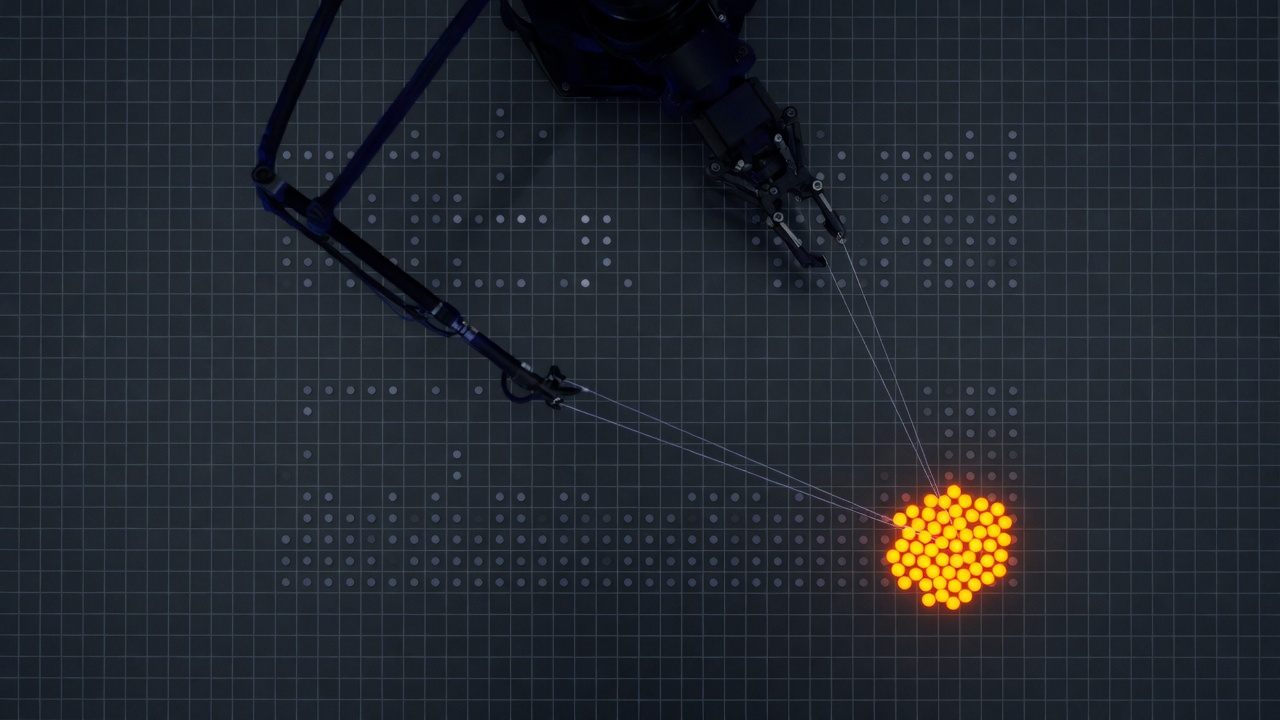
Mulligan: Picking Where Each Episode Starts Took Insert Marker From 21 to 32 of 50 at the Same Episode Count. The Value Critic Added 6 More, p = 0.146, and the Matched Budget Carried 19% More Teleoperation.
Stanford's Mulligan (arXiv:2610.05882, 5 October 2026) restarts human-in-the-loop collection at the poses where the last policy failed. Its headline, 10 to 34 points over HG-DAgger on three real Franka tasks, stacks two changes. The paper's own Table 1 splits them: start-state selection gave 22, 8 and 10 points, the value critic 12, 2 and 6, none of the critic steps significant alone. Episode counts were matched, operator time was not: counterfactual demos added 19% and 28% more human frames. We re-derived the Insert Marker counts from the MIT-licensed release.
On a 1 mm pen insertion, choosing where the operator starts each correction episode raised round-5 success from 21 to 32 of 50 held-out starts at the same 50 episodes per round, exact McNemar p = 0.035. That is the measured core of Mulligan, arXiv:2610.05882, posted 5 October 2026 by Lars Ankile and co-authors at Stanford (Shuran Song, Chelsea Finn). Adding a value critic took the same task to 38 of 50, but that step alone was p = 0.146.
The abstract's 10 to 34 point gain over HG-DAgger bundles both changes. Split by the paper's Table 1, start-state selection accounts for 22 of the 34 points on Insert Marker, 8 of 10 on Thread Nut and 10 of 16 on Route Cable. Pooled over all rounds, the start-selection effect is significant on every task. The critic increment is significant on none at the final round.
What Mulligan changes in a DAgger round
In human-in-the-loop imitation learning the operator places the objects, watches the policy, and takes over when it fails. Mulligan treats the object placement as a decision. Each round it evaluates the current policy blind on 50 fresh held-out starts, then spends part of the next round's budget at the exact poses where that policy failed, earliest failure stage first, and fills the rest with the pose farthest from every start already collected. Round 0 uses 100 teleoperated demonstrations at scrambled Sobol poses rather than uniform random ones.
When a correction only shows recovery from a mistake, the operator can reset to the same start and teleoperate the whole task, a counterfactual demonstration. Each one replaces a coverage-fill start, so the episode count per round stays at 50 (100 on Route Cable). The operator recorded 59 counterfactuals in 250 Insert Marker collection episodes, 72 in 250 on Thread Nut and 70 in 500 on Route Cable (Table 14).
The learner is separate. HG-DAgger trains a Diffusion Policy on human-controlled frames from successful episodes. HiL-IDQL keeps that actor and adds an IQL critic trained on every frame, failures included, that picks the best of 32 sampled action chunks at deployment. In the real-world runs the critic was switched on from round 3. Hardware is the DROID Franka Panda; the tasks are Insert Marker (1 mm clearance), Thread Nut and Route Cable (two clips), with object ranges of 15 to 46 cm.
Round 5, split into the two things that changed
The real-world experiment ran two collection campaigns, uniform starts and Mulligan starts, and scored three policies per task in one blinded, interleaved session on the same 50 starts. The middle arm, the Mulligan campaign's actor without the critic, is what separates the two contributions. The paper reports it in Appendix B; the abstract does not.
| Task | Uniform starts, HG-DAgger | + Mulligan starts (same actor), p vs uniform | + critic reranking, p vs Mulligan actor | Points from starts / from critic | Source |
|---|---|---|---|---|---|
| Insert Marker | 21/50 (42%) | 32/50 (64%), p=0.035 | 38/50 (76%), p=0.146 | +22 / +12 | Table 1; released results.json |
| Thread Nut | 31/50 (62%) | 35/50 (70%), p=0.454 | 36/50 (72%), p=1.000 | +8 / +2 | Table 1 |
| Route Cable, both clips | 9/50 (18%) | 14/50 (28%), p=0.302 | 17/50 (34%), p=0.629 | +10 / +6 | Table 1, Table 3 |
| Insert Marker, pooled R0 to R5 | 103/300 (34.3%) | 138/300 (46.0%), p=0.0019 | not pooled | +11.7 / not reported | Table 2 |
| Thread Nut, pooled R0 to R5 | 142/350 (40.6%) | 180/350 (51.4%), p=0.0007 | not pooled | +10.9 / not reported | Table 2 |
| Route Cable, pooled R0 to R5 | 33/300 (11.0%) | 51/300 (17.0%), p=0.0356 | not pooled | +6.0 / not reported | Table 2 |
On Insert Marker the critic's six extra successes came from runs that had been timing out. In the released round-5 rollouts the actor-only Mulligan policy had 32 successes, 5 failures and 13 timeouts at the 800-step cap. With reranking: 38 successes, 6 failures, 6 timeouts. The uniform baseline had 21, 14 and 15. The paper's stage breakdown (Appendix B.7) says the same thing from another angle: start selection helped most at the grasp stage early on, and the critic's gains sat in the final insertion.
Thread Nut is the weak case. Neither step is significant at round 5 (31, 35, 36 of 50). The pooled comparison over all rounds, 142 of 350 against 180 of 350, is significant at p = 0.0007, so the start-selection effect exists there but faded by the last round. On Route Cable the critic's increment changed sign across rounds (Table 3: full successes 10 vs 11 at round 3, 17 vs 15 at round 4, 17 vs 14 at round 5).
Matched episodes did not mean matched operator time
The comparisons hold the number of episodes per round fixed. They do not hold teleoperation fixed. A counterfactual demonstration costs one episode in the budget and a full teleoperated run in practice, and Mulligan's campaign recorded 59 to 72 of them per task. Table 7 counts the result: the Mulligan campaign trained on 38,017 human-controlled frames on Insert Marker against 31,969 for uniform (18.9% more), and 34,536 against 26,906 on Thread Nut (28.4% more). The paper gives 8% for Route Cable. Appendix E.2 states that none of its counts measure operator wall-clock time.
Some of the start-selection gain may therefore be more human demonstration rather than better-placed human demonstration. The paper's counterfactual ablation bounds this only early: on Insert Marker, round-1 success was 38% with counterfactuals against 14% without, but 47% and 48% at round 2. On Thread Nut 34% vs 28% at round 1 and 54% vs 40% at round 2, similar by rounds 3 and 4. There is no arm with Mulligan starts, no counterfactuals and full rounds to round 5, so the split between placement and extra demonstration is not measured at the final checkpoint.
What this means for anyone paying for operator hours
The cheap part of Mulligan is the part that carried most of the measured gain. Start selection needs a log of failed start poses, a farthest-point sampler and a reset card the operator can follow. No model change. Judgement: a collection team running DAgger-style corrections can adopt it without touching the training stack, and should log start poses per episode even if it does not, because that log is what makes the selection possible.
Budget in teleoperated frames or minutes, not episodes. If a protocol lets operators choose full re-demonstrations inside an episode quota, two campaigns with the same quota can differ by a quarter in human data. Mulligan reports frames, which is better than most papers. A buyer comparing collection strategies should ask for operator minutes as well.
Failure concentration is the premise to check on your own task before buying the method. In the Sobol-only Square-Narrow probe, a round-2 policy at 85.95% success had 94.8% of its failures in the hardest 25% of start poses; the other two seeds scored 77.9% and 81.9% on the same lattice. If your failures are spread evenly, there is little for start selection to find.
The release is unusually complete: 224 Hugging Face datasets under the MIT licence, including 2,550 blinded evaluation episodes with per-start outcomes and four camera streams, plus a browsable Policy Arena. That makes these real-robot rollouts usable as commercial training or evaluation data, which is rare for an academic release. BLO LAB has looked at operator-time accounting before: Res-HIL's 20-demo win was cheaper in operator minutes on three tasks and dearer on two, and TANDEM's 2.9x was per teleoperator second, not per demo.
Check it yourself
Insert Marker round 5 is one dataset: https://huggingface.co/datasets/mulligan/real-marker-d2-r05-eval. Download results.json from it. The summary block lists baseline_r05_dp 21 successes, mulligan_r05_dp 32 and mulligan_r05_idql_c200k_n32 38, each out of 50.
Pair by start and recompute the tests: python3 -c "import json,math,collections as c;d=json.load(open('results.json'));R=c.defaultdict(dict);[R[x['round']].__setitem__(x['policy_id'],x['outcome']=='success') for x in d['rollouts']];f=lambda a,b:(sum(R[k][b] and not R[k][a] for k in R),sum(R[k][a] and not R[k][b] for k in R));print(f(0,1),f(1,2))" prints (17, 6) and (9, 3) discordant pairs. Exact two-sided McNemar on those gives 0.0347 and 0.146, the paper's values.
Outcome counts per policy are in the same file under rollouts[].outcome (success, failure, timeout). All datasets: https://huggingface.co/api/datasets?author=mulligan&limit=500 returns 224 entries, each tagged license:mit, on 6 October 2026.
In the paper (https://arxiv.org/html/2610.05882v1): Table 1 and Table 2 in Appendix B.2, Table 7 in B.10 for human frames, Table 13 in E.2 for budgets, Table 14 in E.3 for counterfactual counts, and Appendix F.1 for the 94.8% failure concentration.
What would prove this wrong
Our claim: in Mulligan's real-robot results, start-state selection is the measured effect and the critic's final-round increment is not established; and part of the start-selection gain may be extra teleoperation from counterfactual demonstrations.
It is wrong if, by 30 June 2027, the authors or another group run Mulligan start selection without counterfactual demonstrations through round 5 on any of these three tasks and it keeps at least two thirds of the start-selection gain (15 of 22 points on Insert Marker), or if a critic increment over the Mulligan actor reaches p below 0.05 on 50 or more paired real starts. Either result would mean placement alone does the work, or that the critic does. We will update this article if a revised version reports it.
Sources
- Ankile, Dong, Bhowmik, Muppidi, Yuan, Song, Finn, Mulligan: Performance-Guided Data Collection for Efficient On-Robot Learning, arXiv:2610.05882, 5 October 2026
- arXiv HTML: Tables 1, 2, 7, 13, 14; Appendix F.1
- Mulligan project page
- Mulligan Hugging Face organisation, 224 MIT-licensed datasets (checked 6 October 2026)
- Insert Marker round-5 evaluation dataset with results.json
- Mulligan Policy Arena, per-session episodes
- BLO LAB, Res-HIL in operator minutes
- BLO LAB, TANDEM demos per operator second
Building or training robots?
We license manipulation datasets and run custom capture programs. Get in touch to see what fits.

A Closed-Form Weight Edit Took pi0.5 From 27 to 106 of 128 on a Misread Instruction, but Only When Written Into the VLM

V-JEPA 2's Predictor Adds 0.04 Top-1 Over Copying the Present on 27,000 Egocentric Trials. By Horizon, It Runs From Minus 0.05 at 1 s to Plus 0.16 at 3.5 s.
