
Gemini Robotics 2 Unscrews a Light Bulb 92% of the Time and Screws One In 36%
Same robot, same hand, same bulb, same socket, run backwards. Google DeepMind's own 30 July 2026 numbers put unscrewing at 92% and screwing at 36%, a 56-point gap on a reversed task. Sorting all eleven published success rates by whether the task regulates force reproduces the ranking almost exactly, and the hand doing the 36% has fingertips that resolve 0.005 N at 180 Hz.
Google DeepMind published eleven task success rates for Gemini Robotics 2 on 30 July 2026. Two of them describe the same object in the same socket with the same hand, run in opposite directions: unscrewing a light bulb succeeds 92% of the time, screwing one in succeeds 36% of the time. That is a 56-point gap on a task pair where perception, kinematics, workspace and grasp are held constant and only the direction of the contact constraint changes.
Sort all eleven numbers by whether the task requires regulating a contact force to a target, rather than merely reaching a pose, and you recover the ranking. The four lowest scores on the dexterous hand are all force-regulated. The exception is instructive and we get to it below.
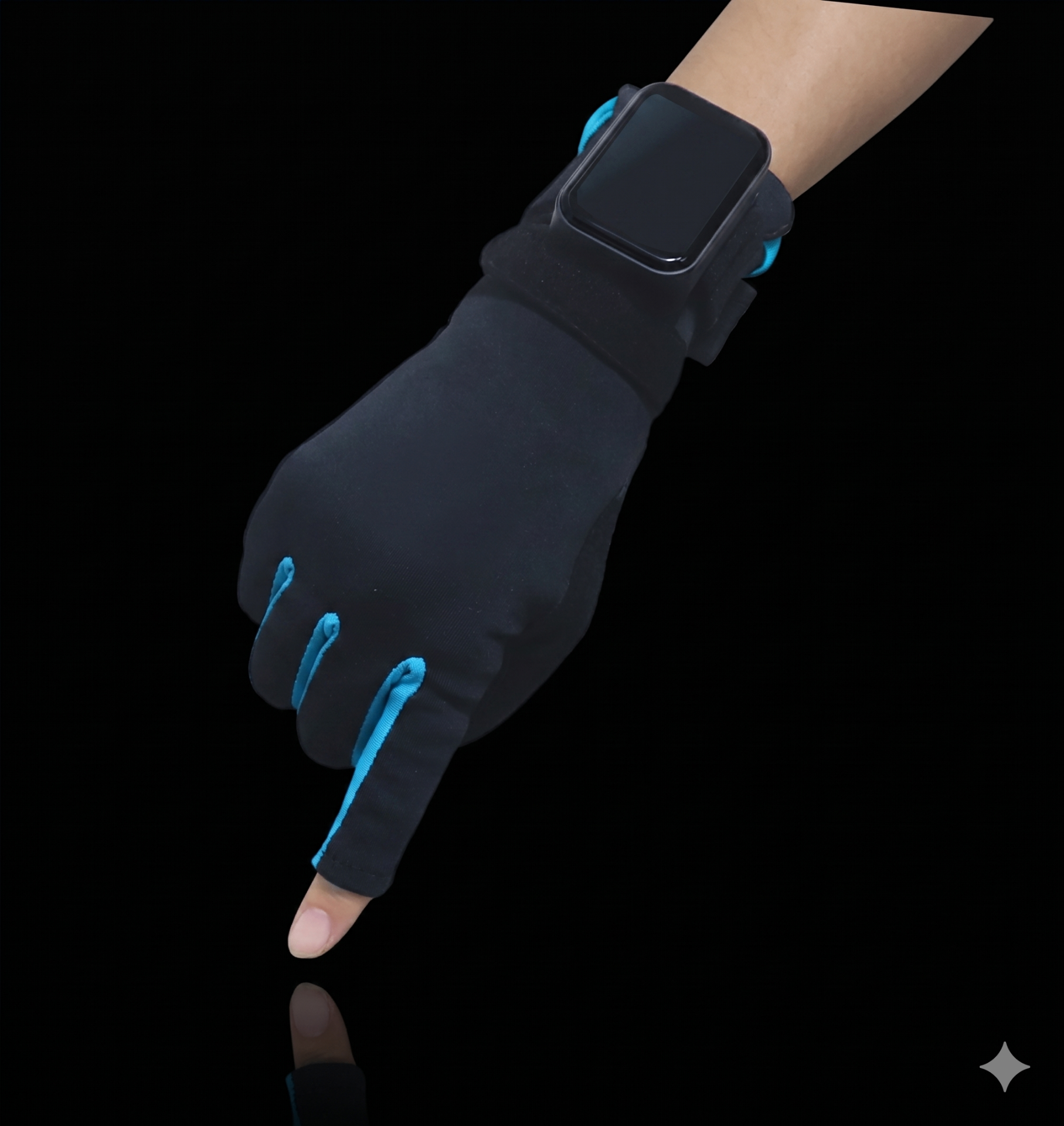
The hand in question is an Apptronik Apollo 2 fitted with SharpaWave hands. Each SharpaWave fingertip carries a miniature camera behind more than 1,000 tactile pixels, resolves forces down to 0.005 N, and streams pressure and texture at up to 180 Hz. DeepMind's announcement describes Gemini Robotics 2 as a vision-language-action model that converts vision and language input into motor control. It does not mention force, torque, tactile, haptic, compliance or impedance anywhere. Whether that tactile stream reaches the policy is not reported.
What was announced, and when
On 30 July 2026 Google DeepMind announced three models: Gemini Robotics 2, a VLA for whole-body control of humanoids and bi-arm robots; Gemini Robotics ER 2, an embodied-reasoning VLM for multi-step planning; and Gemini Robotics On-Device 2, which adapts to a new embodiment with fewer than 200 examples. The headline demonstration was Apollo 2 walking to a table, picking up a watering can, and placing it on a shelf.
Several secondary write-ups in early September 2026 attributed force transparency to Gemini Robotics 2, describing fingers that yield when pushed and measure pressure. We could not find that claim in the DeepMind announcement, which contains no force-related term at all. We are flagging it as unverified rather than repeating it.
All eleven numbers, sorted by whether the task has a force target
Below are every published Gemini Robotics 2 success rate, the platform each was measured on, and our classification of whether completing the task requires holding a contact force or torque near a target value. The right-hand column pulls the corresponding physical quantity from the BLO LAB Force-to-Task Registry where a sourced measurement exists.
| Task | Platform and end effector | Success | Force target? | Physical requirement (Force-to-Task Registry) |
|---|---|---|---|---|
| Unscrew a light bulb | Apollo 2 + SharpaWave (22 DoF) | 92% | No, unwind to free | not reported for bulbs; jar-lid class 4.1-10.2 Nm |
| Precise insertion | Franka Duo + gripper | 89.6% | Yes | peg-in-hole 5-30 N, typical 10-15 N |
| Diverse tool kitting | Franka Duo + gripper | 78.9% | Partly | not reported |
| Pick up from shelf | Apollo 2 + Inspire hands | 76.3% | No | not applicable |
| General pick and place | Franka Duo + gripper | 74.2% | No | not applicable |
| Pick up from table | Apollo 2 + Inspire hands | 68.4% | No | not applicable |
| Pick up from floor | Apollo 2 + Inspire hands | 45.7% | No | not applicable |
| Tie a trash bag | Apollo 2 + SharpaWave | 44% | Yes, tension to knot | not reported |
| Seal a ziplock bag | Apollo 2 + SharpaWave | 40% | Yes, seal pressure | not reported |
| Screw in a light bulb | Apollo 2 + SharpaWave | 36% | Yes, thread plus seating torque | hand-tighten a screw 1-2 Nm snug, 4.69-5.9 Nm max |
| Sweep into a dustpan | Apollo 2 + SharpaWave | 32% | Yes, maintain edge contact | not reported |
Plotted, the split is clean on the dexterous hand and broken on the gripper arm. Every SharpaWave task with a force target lands between 32% and 44%. The one force-regulated task that scores 89.6%, precise insertion, was measured on a Franka Duo rather than on Apollo.
Why unscrewing is easy and screwing is not
Unscrewing a bulb is a monotone release. Grip, rotate counter-clockwise, and the constraint relaxes on every turn. Vision suffices because the error signal is visible: the bulb rises out of the socket, and a grip that is slightly too tight or slightly off-axis still completes the task. There is no state you can enter from which recovery is impossible short of crushing the glass.
Screwing in is a constrained search followed by a torque termination. The threads must be aligned within roughly a degree before rotation can begin, and if they are not, rotating produces cross-threading, which looks identical to correct engagement from a head-mounted camera and differs by a few newtons of axial resistance. Then you have to stop. Too little seating torque and the bulb has no contact, too much and the glass separates from the base. Neither the alignment check nor the stop condition has a reliable visual signature.
Our Force-to-Task Registry puts casual hand-tightening of a screw at roughly 1 to 2 Nm, with 4.69 to 5.9 Nm as the maximum voluntary human torque. That is the band a policy has to land in, and it is a band defined in newton-metres, not pixels.
The Franka exception, and what it does and does not prove
Precise insertion is a force-regulated task, and it scores 89.6%. It is also the only force-regulated task in the set not measured on Apollo. It ran on a Franka Duo, and the Franka Research 3 arm has link-side torque sensors in all seven axes, reads system state at 1 kHz, and exposes joint torque through the Franka Control Interface, which is what makes Cartesian impedance control practical on that platform.
That is suggestive and it is not proof. Insertion on a Franka differs from screwing on Apollo in the robot, the end effector, the task, the training data and the evaluation protocol at the same time. Any one of those could carry the effect. We are stating a hypothesis: on this evidence, the tasks that fail are the ones where a force target has to be met by a system whose only commanded quantity is a pose, and the one force task that succeeds runs on the one platform that closes a force loop in hardware.
The practical read for anyone building on this is narrower and safer. If your task has a torque or force termination condition, the published Gemini Robotics 2 numbers give you between 32% and 44% on a humanoid hand, and you should budget for a hardware force loop or a scripted termination rather than expecting the VLA to supply one.
The sensing chain on that platform has one undocumented link, and it is the link that decides the argument.
Check it yourself
1. Open the announcement at https://deepmind.google/blog/gemini-robotics-2-brings-whole-body-intelligence-to-robots/ and read the three results tables. Whole-body manipulation on Apollo with Inspire hands gives 68.4, 45.7 and 76.3. Multi-finger dexterity on Apollo with SharpaWave gives 92, 36, 44, 32 and 40. Gripper dexterity on Franka Duo gives 74.2, 78.9 and 89.6.
2. Search that page for force, torque, tactile, haptic, compliance, impedance and proprioception. As of 9 September 2026 all seven return zero hits.
3. Check the hand at https://www.sharpa.com/pages/wave for the 22 active degrees of freedom, the per-fingertip tactile array of more than 1,000 pixels, the 0.005 N sensitivity, the 180 Hz update rate and the fingertip output above 20 N.
4. Check the arm in the Franka Research 3 datasheet at https://download.franka.de/Franka-Research-3_Datasheet_v1.1_August2022.pdf for the link-side torque sensors in all seven axes and the joint torque limits of 87 Nm on axes 1 to 4 and 12 Nm on axes 5 to 7.
5. Pull the force numbers from https://blomega.com/lab/data/force-to-task.json and match them to the task names in the table above.
What would prove this wrong
The cleanest falsification is a Gemini Robotics 2 technical report that states the policy consumes the SharpaWave tactile stream. If DeepMind publishes an observation-space specification listing a tactile or force input before 31 March 2027, the framing here is wrong and the 36% needs a different explanation. We predict no such specification appears, on the grounds that the July announcement describes the model purely as vision and language to motor control.
The second falsification is empirical and anyone with the hardware can run it. Take the screw-in-a-bulb task, add a scripted torque termination at 1.5 Nm using the SharpaWave fingertip signal, and leave the policy otherwise unchanged. If success does not move well above 36%, the force explanation is wrong and the failure is in thread alignment or in the policy's long-horizon stability rather than in the missing force channel.
The third is a successor model. If Gemini Robotics 3 reports screw-in parity with unscrew, above 85%, without adding a force or tactile input, then vision at sufficient scale recovers the contact state after all and the whole argument is a data-scale argument rather than a modality argument.
Sources
Google DeepMind, Gemini Robotics 2 announcement, 30 July 2026, for all eleven success rates, the model lineup and the platform list. Sharpa, SharpaWave product page, for the 22 DoF, the fingertip tactile array, the 0.005 N sensitivity and the 180 Hz rate, corroborated by CNX Software, 2 June 2026. Franka Robotics, Franka Research 3 datasheet, for the seven-axis link-side torque sensing and the joint torque limits. BLO LAB Force-to-Task Registry for the torque and force bands, each row of which carries its own primary citation.
Building or training robots?
We license manipulation datasets and run custom capture programs. Get in touch to see what fits.

A Closed-Form Weight Edit Took pi0.5 From 27 to 106 of 128 on a Misread Instruction, but Only When Written Into the VLM

V-JEPA 2's Predictor Adds 0.04 Top-1 Over Copying the Present on 27,000 Egocentric Trials. By Horizon, It Runs From Minus 0.05 at 1 s to Plus 0.16 at 3.5 s.
