
Ten Crowd Action Labels per Keyframe Beat Extra Teleoperation on 5 of 5 Real Tasks at Equal Robot Time. It Cost About 1.5x the Human Time.
CrowdMAPS (arXiv:2611.15078, University of Minnesota, CoRL 2026) has 47 web annotators add alternative goal poses to states a robot already visited. With ten actions per keyframe, a diffusion policy averaged 73.2% on five real tasks, against 53.2% for adding expert teleoperation at about the same robot time (2.2 vs 2.3 hours) and 25.8% for the base data. One label per keyframe lost to extra teleoperation on every task. Researchers hand-checked each label and rejected up to 49%, and total human time ran about 1.5x.
Adding nine crowd-sourced alternative actions to each keyframe of an existing robot dataset raised a diffusion policy from 25.8% to 73.2% mean success on five real tasks. Spending about the same robot time on more expert teleoperation reached 53.2%. The paper is CrowdMAPS, arXiv:2611.15078, posted 11 November 2026 by a University of Minnesota group and accepted at CoRL 2026.
The trade is robot hours for human hours. The MAPS data used 2.2 robot hours against 2.3 for the extra teleoperation, and the authors state that at matched performance it needed approximately 1.5x the total human time. With one label per keyframe instead of ten, it lost to extra teleoperation on 5 of 5 tasks.
Minnesota recruited 47 annotators and had them label states, not drive robots
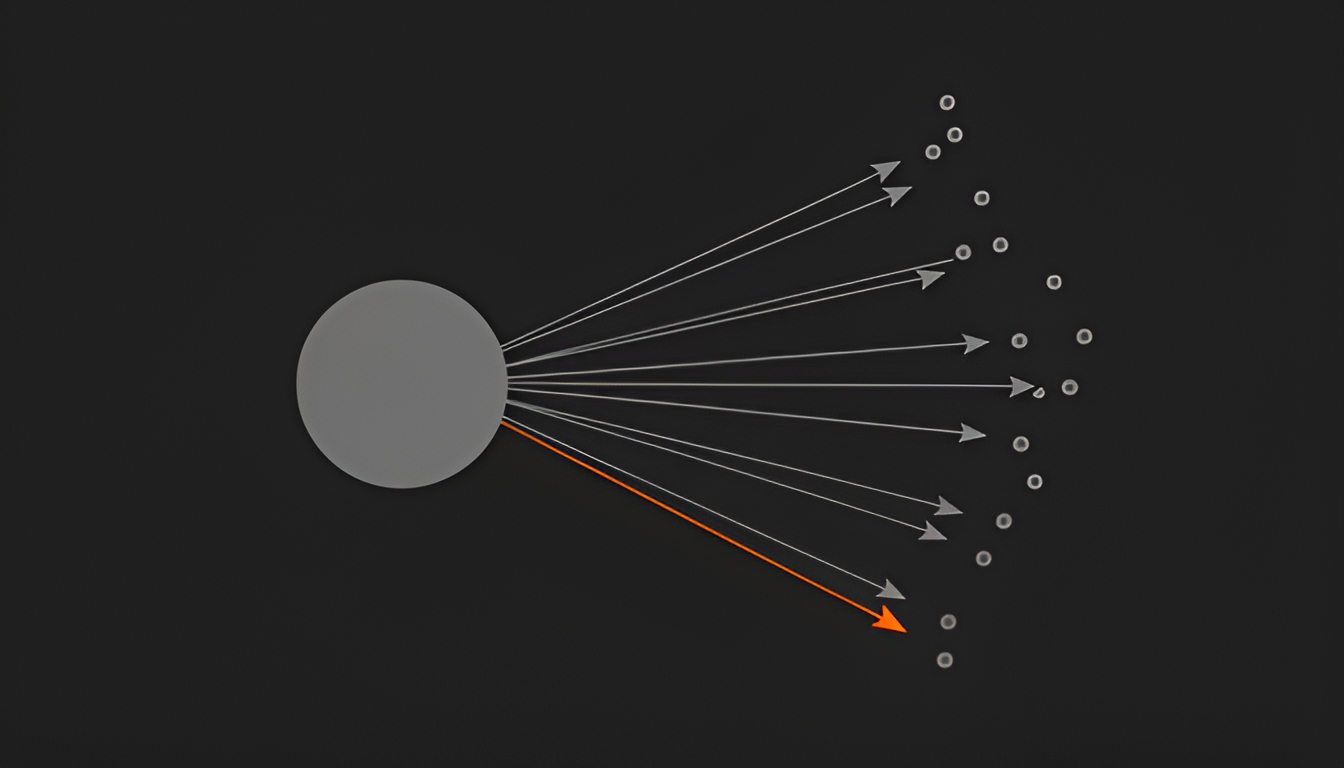
The authors are Yilong Song, Harshvardhan Chandirasekar, Karthik Desingh and Chen Zhu-Tian. Their starting point is that web teleoperation systems still bind one user to one robot, so throughput is capped by hardware. CrowdMAPS splits the work: a robot is needed to reach a physical state, and anyone with a browser can then say what else would have been a valid next move from it. They call the result Multiple Actions per State, MAPS, and the number of labels per keyframe its width, K.
An action here is a goal pose: an end-effector position, an orientation and a binary gripper command, reached by a motion planner. Labels attach only to keyframes, which occur at the start of a trajectory and each time a goal is completed. For each keyframe, LangSAM segments the task objects, Any6D estimates their 6-DoF poses, and CAD meshes are placed in Isaac Lab. The annotator sees that reconstruction beside the raw camera views and drags a rendered gripper to a new goal.
The 47 participants were recruited through university mailing lists and social media. 43 of them (91.5%) were graduate or undergraduate students, and 78.7% had never used a robot arm. Median submission time was 7 to 12 seconds on the four tasks with timing logs. Compensation is not reported.
Table 1 of the paper, with the means it does not print
All rows start from the same base set of expert demonstrations. The second row adds more expert teleoperation; the MAPS rows add crowd-labelled trajectories instead, converted to action chunks by linear interpolation toward each goal pose. Data sizes are trajectories.
| Training data | Drawer | Insertion | Pouring | Sorting | Switches+ | Mean of 5 | Source |
|---|---|---|---|---|---|---|---|
| Base demos only | 36 | 0 | 48 | 16 | 29 | 25.8 | arXiv:2611.15078 v1, Table 1; mean is ours |
| Base + extra expert teleoperation | 56 | 24 | 80 | 52 | 54 | 53.2 | arXiv:2611.15078 v1, Table 1; mean is ours |
| Base + MAPS, K=1 | 36 | 16 | 76 | 32 | 41 | 40.2 | arXiv:2611.15078 v1, Table 1; mean is ours |
| Base + MAPS, K=2 | 48 | 28 | 84 | 60 | 53 | 54.6 | arXiv:2611.15078 v1, Table 1; mean is ours |
| Base + MAPS, K=5 | 52 | 24 | 92 | 80 | 60 | 61.6 | arXiv:2611.15078 v1, Table 1; mean is ours |
| Base + MAPS, K=10 | 76 | 40 | 92 | 88 | 70 | 73.2 | arXiv:2611.15078 v1, Table 1; mean is ours |
| Data sizes (base / added / MAPS trajectories) | 10 / 5 / 5 | 200 / 100 / 60 | 50 / 50 / 45 | 50 / 50 / 50 | 80 / 80 / 80 | not applicable | arXiv:2611.15078 v1, Table 1 |
| Crowd label acceptance rate | 51% | 98% | 66% | 83% | 94% | not reported | arXiv:2611.15078 v1, Appendix B.2 (Switches, both variants) |
Width has a break-even point near two labels per keyframe
At K=1 the MAPS rows are just more trajectories with a coarser action format, and they lose to extra teleoperation on all five tasks (40.2% vs 53.2% on the mean). At K=2 they win on three of five. At K=5 they win three, tie one and lose Drawer. At K=10 they win all five, by 20.0 points on the mean and by 36 points on Sorting, the task where two cubes can be picked in either order.
The same pattern appears when the labels supervise a keypose policy directly. Over the 18 task and dataset-size settings in the paper's Figure 4, mean success goes 38.7%, 51.3%, 58.4%, 74.2% for K of 1, 2, 5 and 10 (the middle two are our averages of the printed cells). On Sorting and Switches- the gain from K=1 to K=10 averages 42.5 points.
A control separates label content from label count. Replacing the nine crowd labels with Gaussian perturbations of the executed action, with covariance estimated from the crowd labels, gives 43.3% against 74.2%, and matches or beats the crowd version in 1 of 18 settings. Jitter of the right size does not substitute for a person choosing a different valid goal.
The filter is a researcher, and most of the training weight lands on unexecuted labels
Every submission was manually validated by a researcher against three criteria: consistent with the manipulation strategy the expert used on the robot, aligned with the keyframe instruction, and physically coherent. Acceptance was 51% on Drawer, 98% on Insertion, 66% on Pouring, 83% on Sorting and 94% on Switches. At roughly 10 seconds per submission, one accepted label costs about 20 seconds of annotator time at Drawer's rate and about 10 at Insertion's (our division; Drawer submission times were not logged). Reviewer time is not reported, and it is part of the 1.5x.
The training loss holds total keyframe weight constant at 65. At K=10 the executed action gets weight 20 and each of the 9 alternatives gets 5, so 69.2% of the keyframe weight sits on actions no robot ever ran (our arithmetic from Appendix C.1). The authors name the consequence MAPS shift: the dataset gains actions and no new observations, so a policy that follows an alternative can end up in a state the data never shows. Restricting labels to the expert's strategy is how they contain it, and it is also why acceptance on Drawer is 51%.
What it means if you run a collection rig
If robots are the scarce resource and people are not, the result says a second or tenth opinion on each decision point is worth more than another pass on the robot. At equal robot occupancy the gain over extra teleoperation was 20.0 points. If operator hours are the scarce resource, the same table says teleoperation is about 1.5x cheaper per unit of performance, by the authors' own accounting.
The scope is narrow, and the paper says so: quasi-static, single-arm, tabletop tasks with goal-pose actions and a motion planner. A browser cannot convey how hard to press or when a part seats, so the method densifies where to go and leaves contact untouched. Each new task also needs CAD models and object descriptions supplied by hand before the first label can be collected.
Our judgement on the labour model: these are engineering students annotating for a lab, checked one by one by the authors. A paid crowd with no robotics background and no reviewer in the loop is a different experiment, and acceptance rates between 51% and 98% across five tabletop tasks suggest the reviewer was doing real work.
Check it yourself
Open https://arxiv.org/html/2611.15078v1. Table 1 gives the six rows above: average each row across the five tasks to get 25.8, 53.2, 40.2, 54.6, 61.6 and 73.2. The paper's 33.0-point figure is 73.2 minus 40.2, the K=1 to K=10 difference, and the gain over base data alone is 47.4.
The keypose grid is the table inside Figure 4: 18 columns, five rows. Row means are 38.7, 51.3, 58.4, 74.2 and 43.3 for the noise baseline. Acceptance rates and the validation criteria are in Appendix B.2, participant statistics in Table 2 of Appendix B.3, and the loss weights (65, 20, 5) in Appendix C.1. The robot-hours and 1.5x human-time statement is in the RQ2 paragraph of Section 4.2. The project page is https://yilongsong.github.io/CrowdMAPS/.
What would prove this wrong
The claim is that label width beats trajectory count at fixed robot time. It rests on one lab, one policy family and 25 rollouts per cell. Our prediction, a judgement: a replication by 31 December 2027 on a contact-rich or bimanual task, with a paid non-student crowd and no per-label researcher review, will show the K=10 advantage over extra teleoperation shrinking below 10 points on the task mean. If such a replication instead holds a margin near 20 points, action densification deserves a place in standard collection budgets.
A cheaper check from this paper's own design: if the authors release per-annotator data and the gain at K=10 is unchanged when rejected labels are left in, the reviewer was not needed and the 1.5x human-time figure overstates the cost.
Sources
Building or training robots?
We license manipulation datasets and run custom capture programs. Get in touch to see what fits.

A Closed-Form Weight Edit Took pi0.5 From 27 to 106 of 128 on a Misread Instruction, but Only When Written Into the VLM

V-JEPA 2's Predictor Adds 0.04 Top-1 Over Copying the Present on 27,000 Egocentric Trials. By Horizon, It Runs From Minus 0.05 at 1 s to Plus 0.16 at 3.5 s.
